Gallery walls can turn an empty, blank space at home into something personal and special. You can grow one organically as you add to a single framed photo or custom frame starting point, or bring one to life all at once in a planned out display.
No matter how you bring everything together, the results can be beautiful.
In this guide, we explore gallery wall ideas and layout inspiration, along with how to make a gallery wall that feels thoughtful and intentional without getting overwhelmed by the details.
Gallery wall layout ideas to inspire your space
Our Framing and Interiors Expert, Danielle Castagna, offers her insight and tips for creating gallery walls that you'll love for years to come.
1) Grid layouts (clean and structured)
A grid layout creates a strong sense of order, with frames aligned evenly and spacing kept consistent throughout, giving the wall a calm, polished feel.
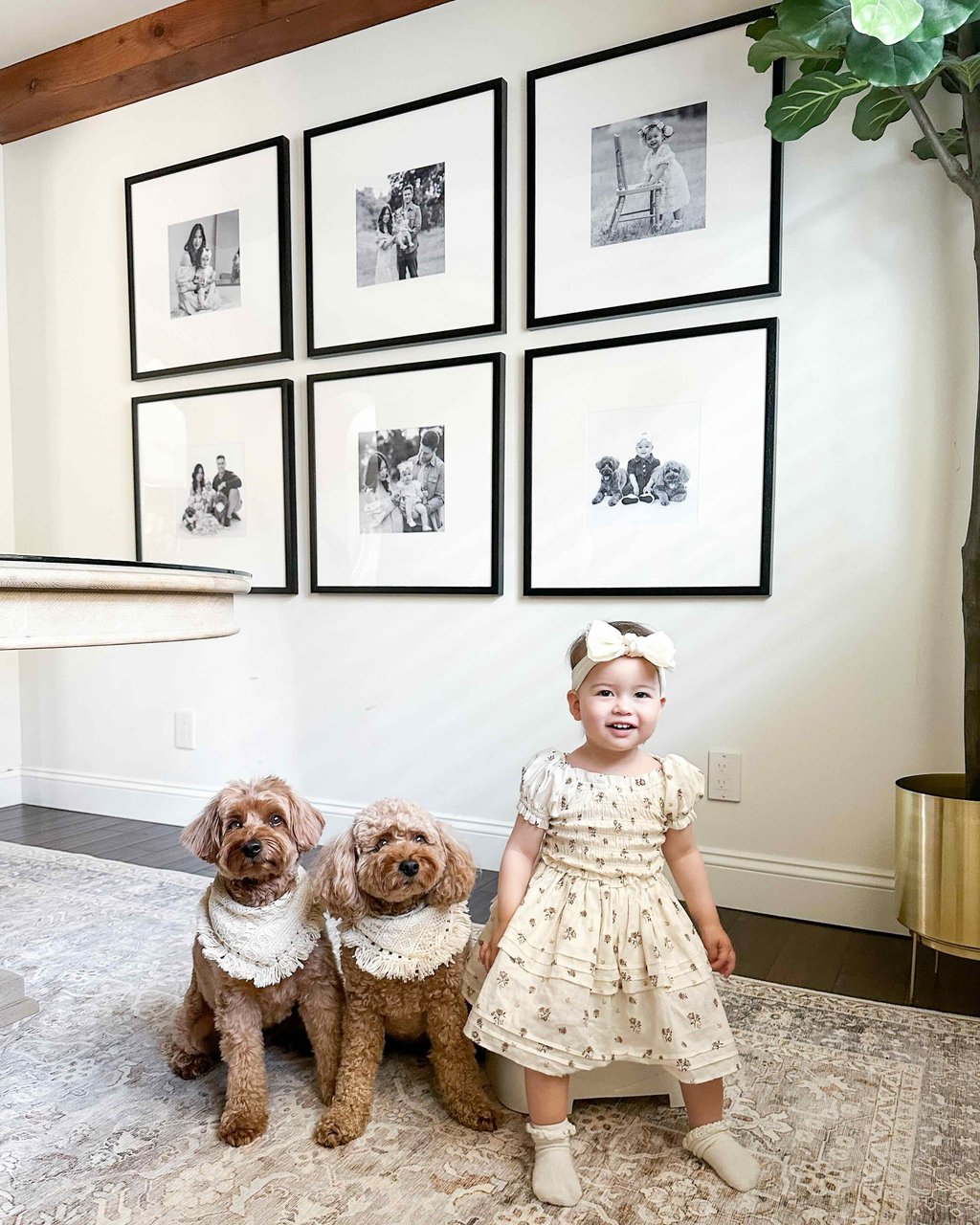
The Grid Six Gallery Wall - 6 Framed photos with matting covering 76" x 50"
This style works particularly well in modern interiors, home offices, or any space that calls for a more refined, intentional look.
Danielle explains: "A grid-style gallery wall offers a more structured, polished look that fits modern or minimalist spaces."
Keeping the frame styles and sizes the same helps maintain that structure, although you can still introduce variety through the images themselves.
2) Organic layouts (relaxed and personal)
Organic layouts take a more flexible approach, with frames arranged within a loose shape rather than strict lines, making it easier to combine different sizes, styles, and artwork.
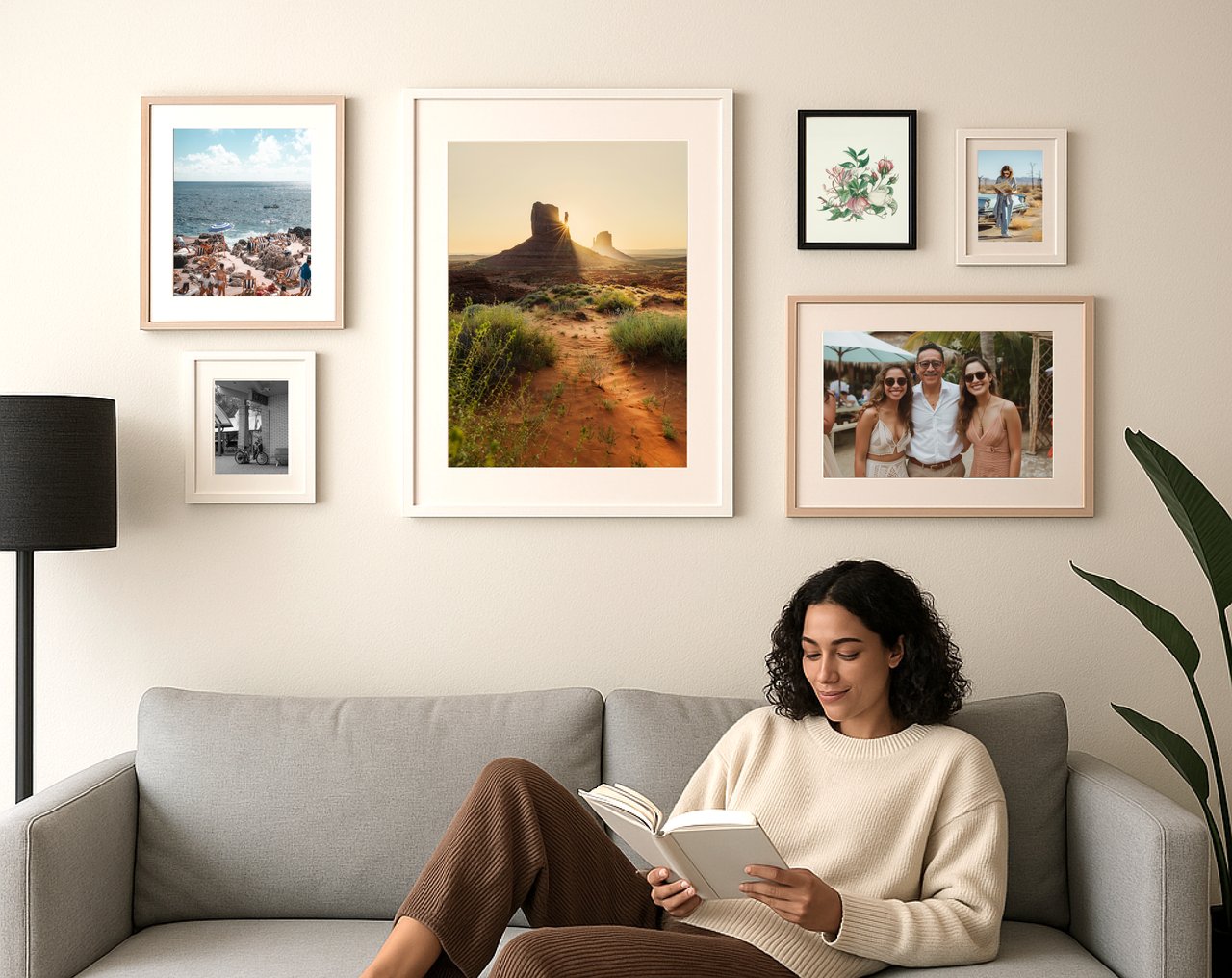
This style often suits hallways and staircases, where a slightly less structured layout feels more natural, and can also work great above and across the width of a couch.
Danielle highlights the shift towards more expressive displays: "Gallery walls are evolving into more curated spaces… mixing photos with personal items like kids' drawings, handwritten letters or small art prints."
You can enjoy total freedom to create something that reflects your personality rather than following a fixed formula.
3) Trio layouts (balanced and versatile)
A three-frame layout offers a simple way to create balance. They can be arranged horizontally above a sofa or bed, or stacked vertically to make use of a narrower section of wall.
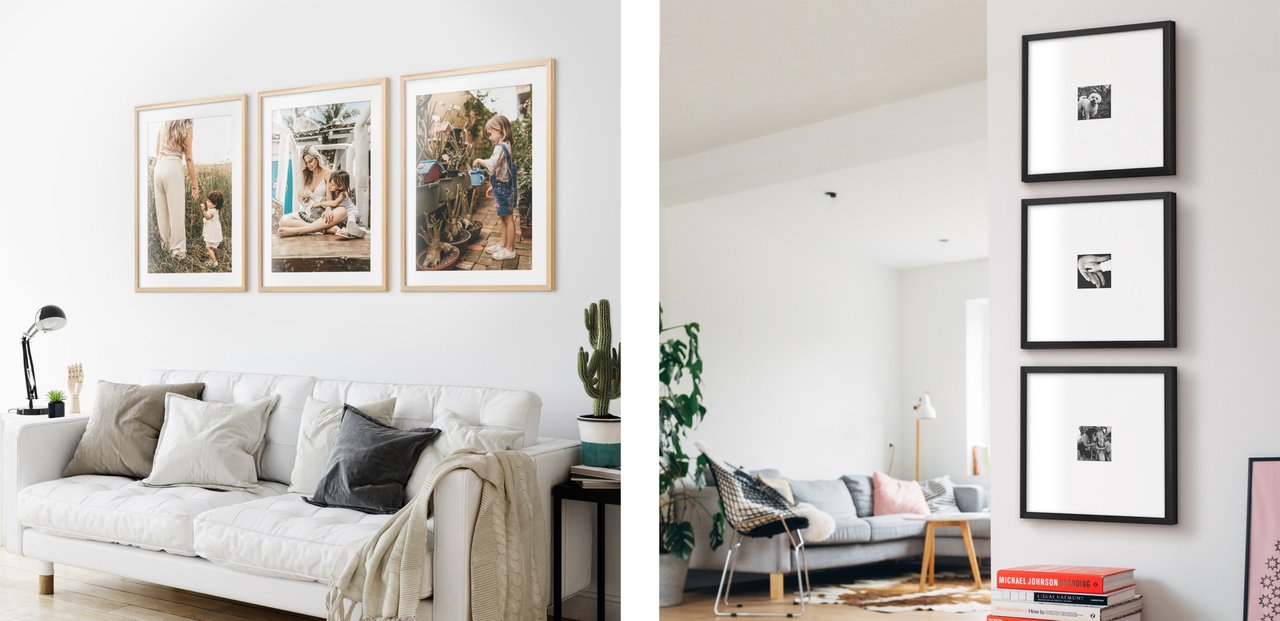
The Large Portrait Trio gallery wall (3 frames for $380) and our Mini Triptych (3 frames for $270)
Trios work particularly well when you want impact without committing to a larger gallery wall, and can be easily adapted to the proportions of your space.
4) Two-piece layouts (simple but impactful)
A pair of frames can still make a strong visual impact, particularly when the prints are larger or more detailed. We love this layout in an entryways, as well as other spaces where you want a clear focal point.
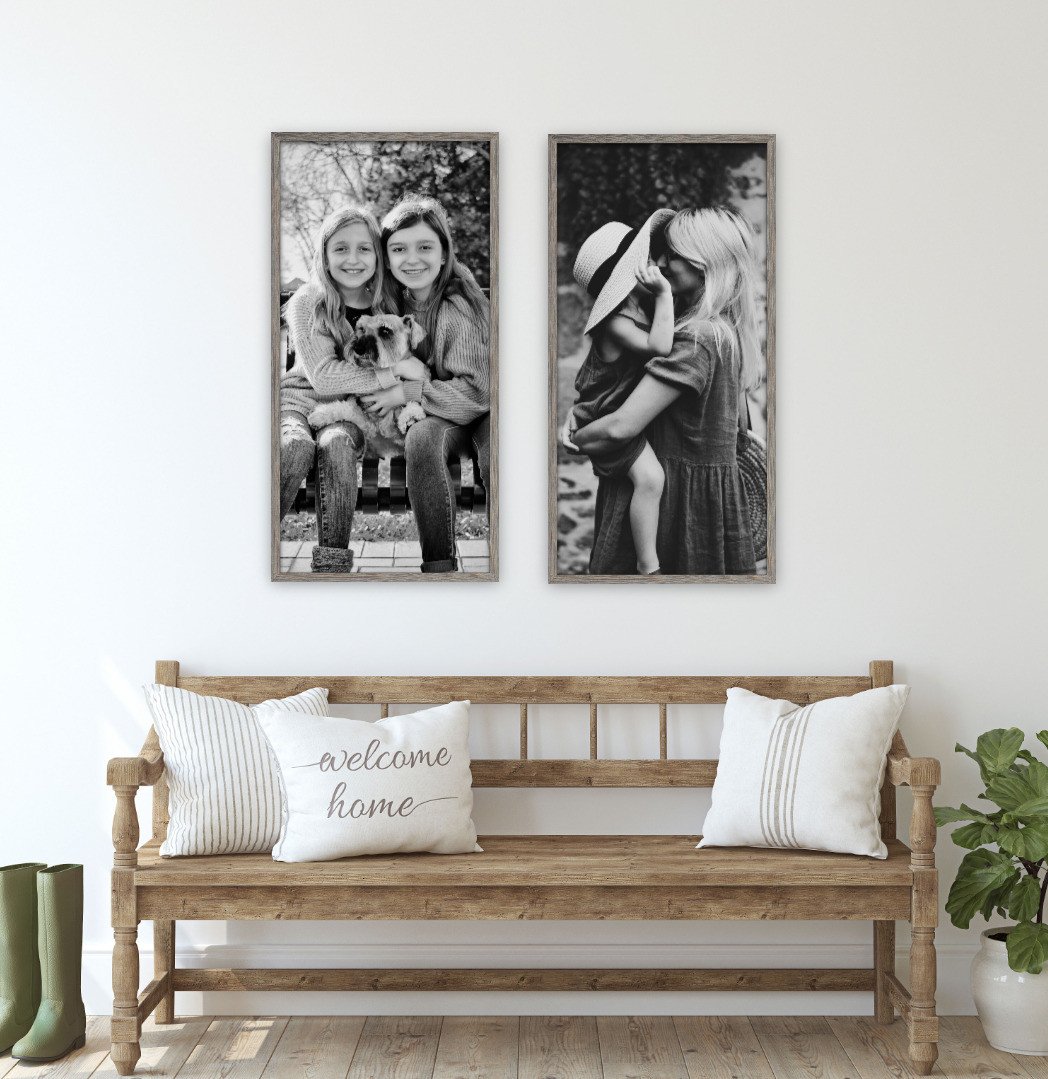
Our Farmhouse Duo gallery wall - 2 framed photos covering 38" x 36" of wall space
When the spacing and alignment are consistent, the simplicity feels deliberate and well considered.
5) Vertical stacks (for tall, narrow walls)
In spaces where width is limited but height is available, a vertical arrangement helps draw the eye upward while making better use of the wall.
This approach works especially well between doorways or along staircases, and combining different frame sizes can add interest while maintaining a sense of structure.
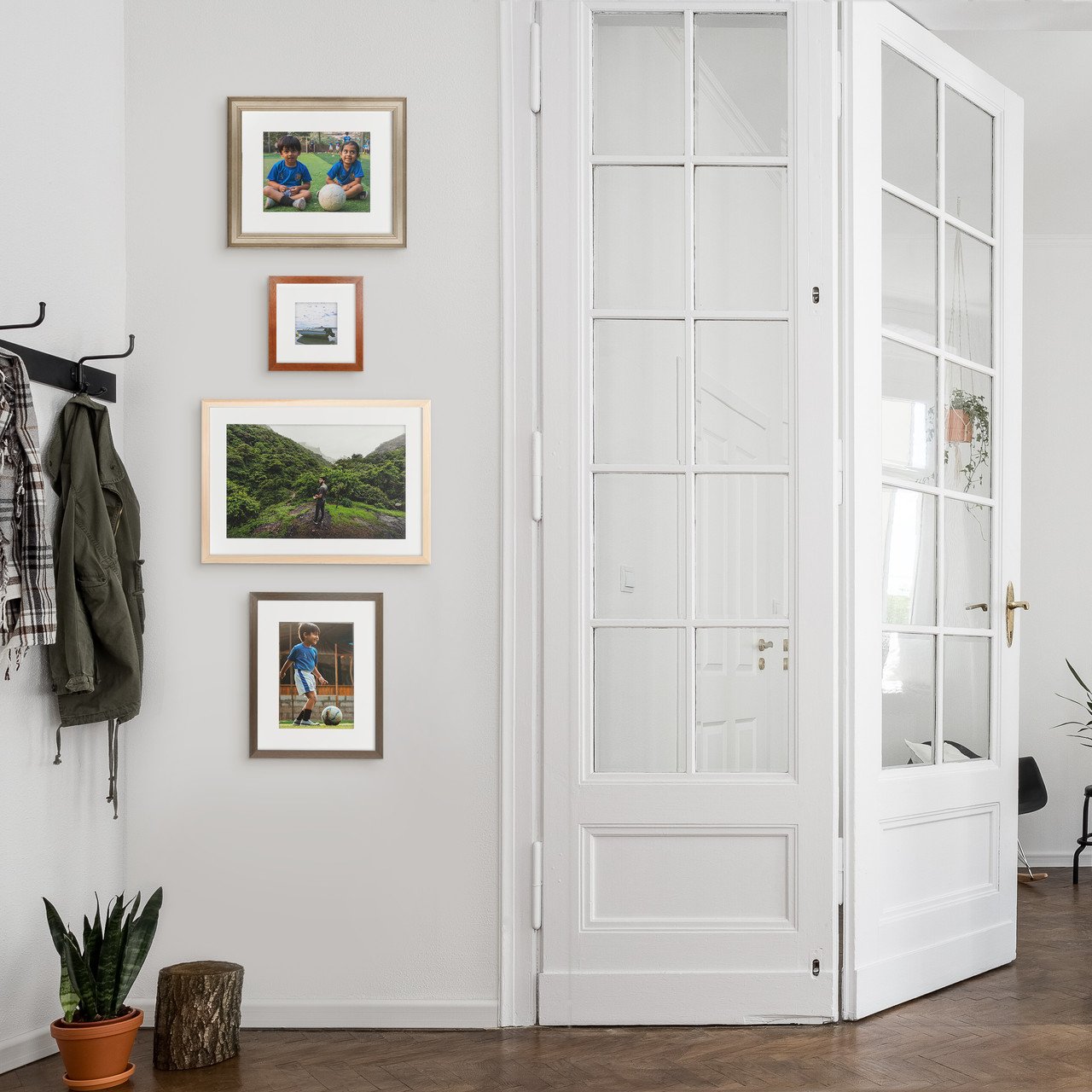
Our Tall Stack gallery layout is a great fit for hanging framed photos where the wall space is narrow
6) Statement organic walls (bold and expandable)
Larger organic layouts can turn a wall into a feature, combining multiple frame sizes and styles to create a layered, expressive effect.
They also offer more flexibility over time, allowing you to add new pieces without disrupting the overall composition.
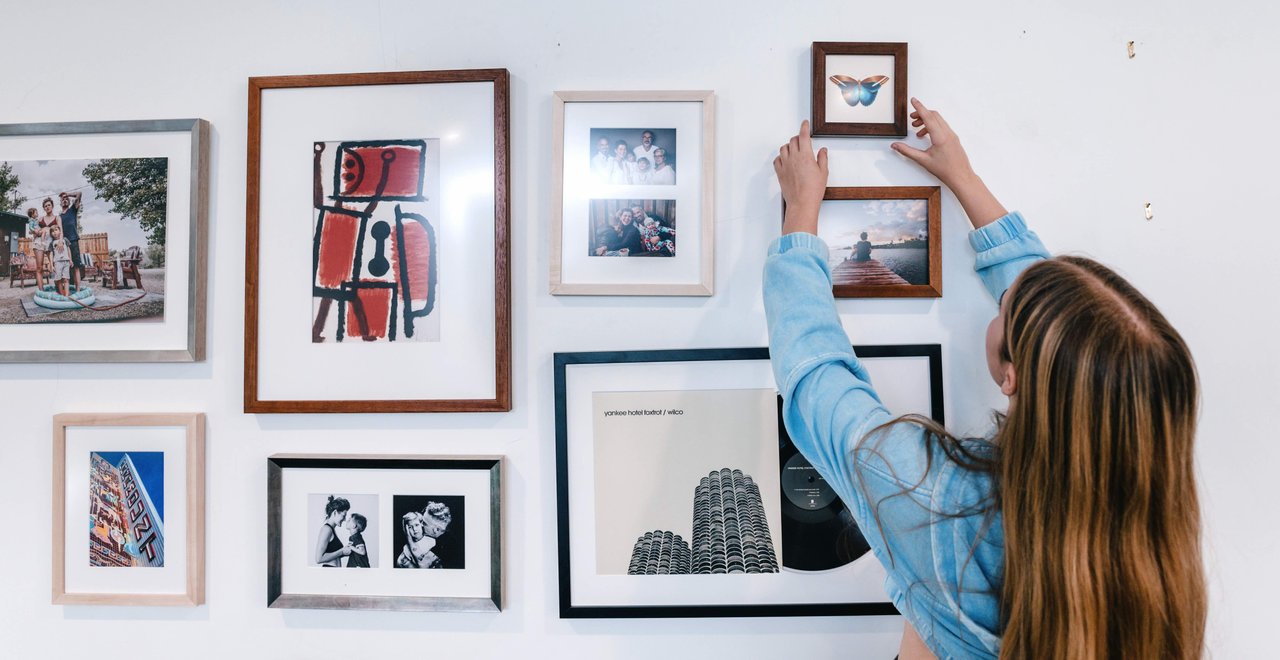
Danielle says: "An organic or salon-style gallery wall allows for more creativity and variation, making it easier to incorporate a mix of different frame sizes and artwork."
Three different gallery wall ideas
With your layout in place, the next step is deciding what kind of gallery wall you want to create. The style you choose can shape everything, from how the space feels to how it functions day to day.
1) Memento walls
Memento walls take a more personal approach, blending framed artwork with meaningful objects like letters, postcards, and keepsakes. Rather than focusing on perfectly curated prints, this style leans into storytelling, creating a display that feels lived-in and uniquely yours.
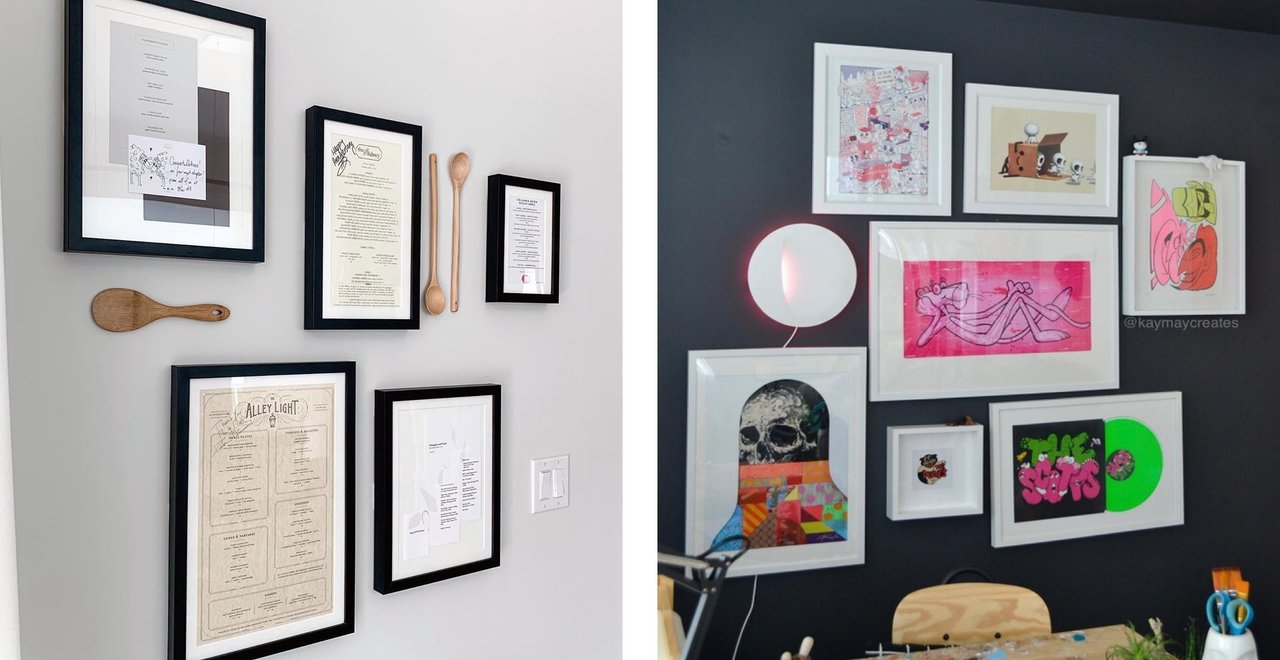
Danielle explains: "Memento walls are displays that mix photos with personal items like letters, postcards, and treasured keepsakes to create a gallery wall that tells a story."
This more relaxed, mood-board style works especially well in homes that aren't overly polished. Entryways are a natural fit, helping to create a warm, welcoming first impression while sparking conversation with guests.
2) Mixing digital art displays with traditional gallery walls
Blending digital art displays with framed pieces is becoming a popular way to keep gallery walls feeling modern without losing their character. Art TVs, in particular, allow screens to sit seamlessly alongside prints, avoiding the visual disruption of a standard television.
As Danielle notes: "Integrating art TVs alongside framed artwork so technology blends into the design is a fun way of bringing art to your home through sleek and seamless tech."
This approach works particularly well in open-plan living spaces, where rooms need to balance relaxation and functionality. During the day, the display feels like part of the décor, while in the evening, it easily transitions into an entertainment space.
3) Mirror gallery walls
Mirror gallery walls offer a practical twist on the traditional format, replacing artwork with collections of mirrors in different shapes and sizes. The result is a display that feels both decorative and functional.
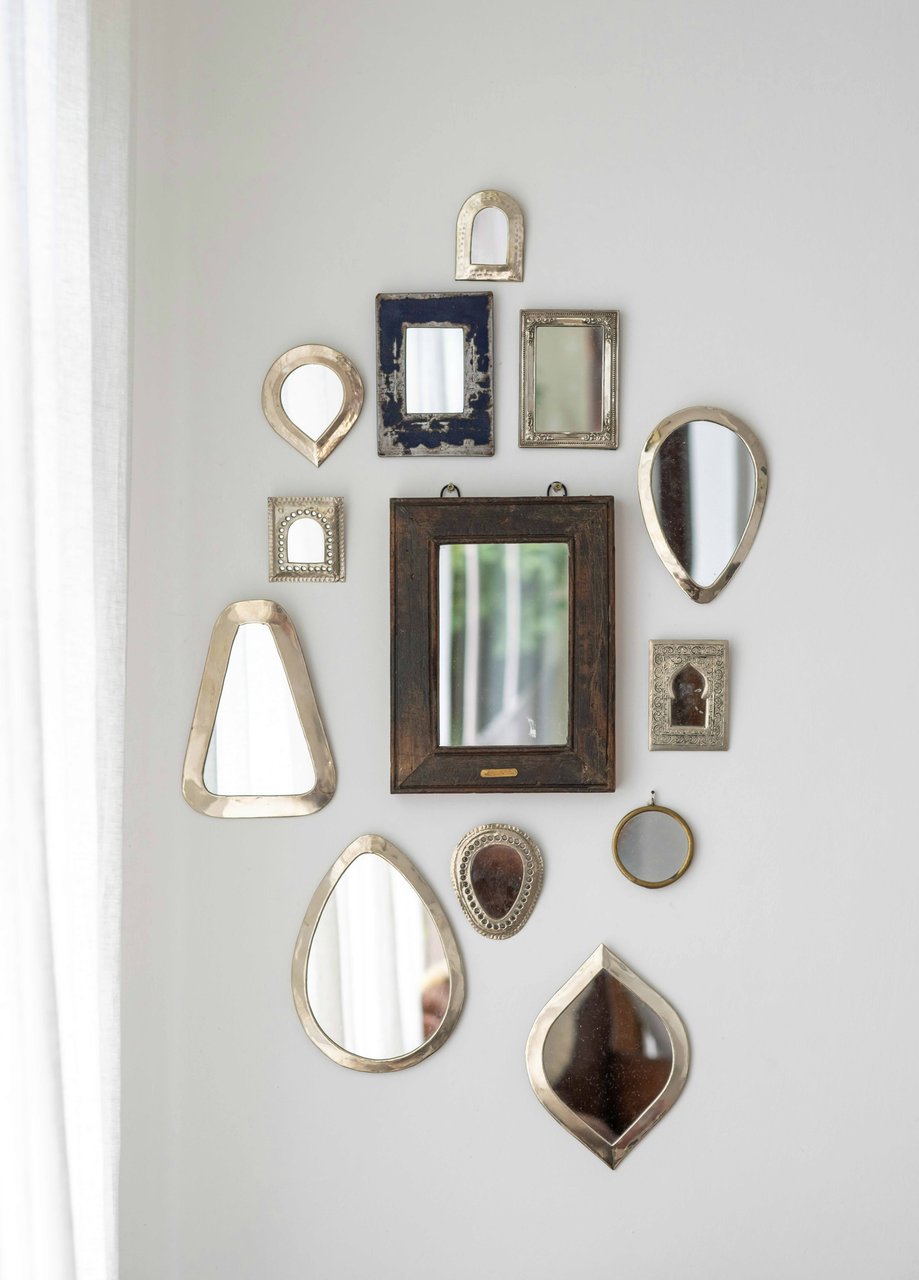
"Using collections of mirrors instead of art within a gallery wall not only adds light but also makes spaces feel larger," Danielle explains.
This style is especially effective in smaller or darker rooms, such as entryways, dining areas, or compact living spaces. By reflecting light and breaking up visual density, mirrors can help a room feel more open while still delivering the impact of a gallery wall.
How to create a gallery wall that feels cohesive
Once you've chosen a layout style, the next step is bringing everything together in a way that feels balanced, which is often where people start to overthink the process.
A more grounded approach tends to work better, focusing on the space first and letting the details follow.
1) Start with the wall itself
Understanding your space and its proportions early on gives you a clearer direction. So, before choosing photos or frames, look at the space you're working with, including its size, shape, and how it relates to the surrounding furniture.
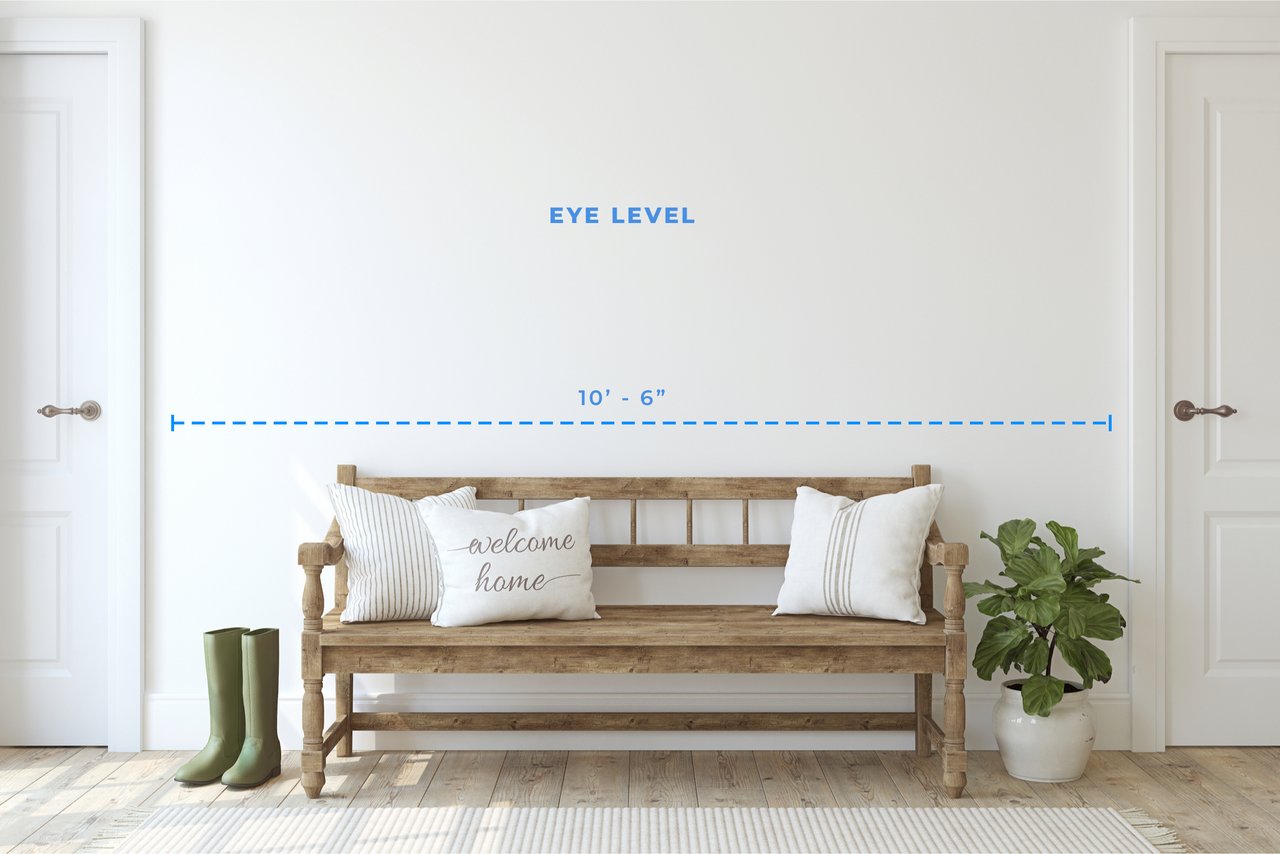
Danielle emphasizes the importance of this first step: "Choosing the right gallery wall style for your space ensures the wall reflects your unique personality as well as meets your interior design goals."
2) Choose a layout that fits the space
Once you understand the proportions, selecting a layout becomes more straightforward, as certain styles naturally suit certain spaces.
Grids fit well in more symmetrical areas, trios are often ideal above furniture, and vertical arrangements help make the most of taller, narrower wall. But you should not feel that anything is one size fits all. Different layout types can fit well on the same wall space, provided the spacing around and between the frame is balanced and proportional.
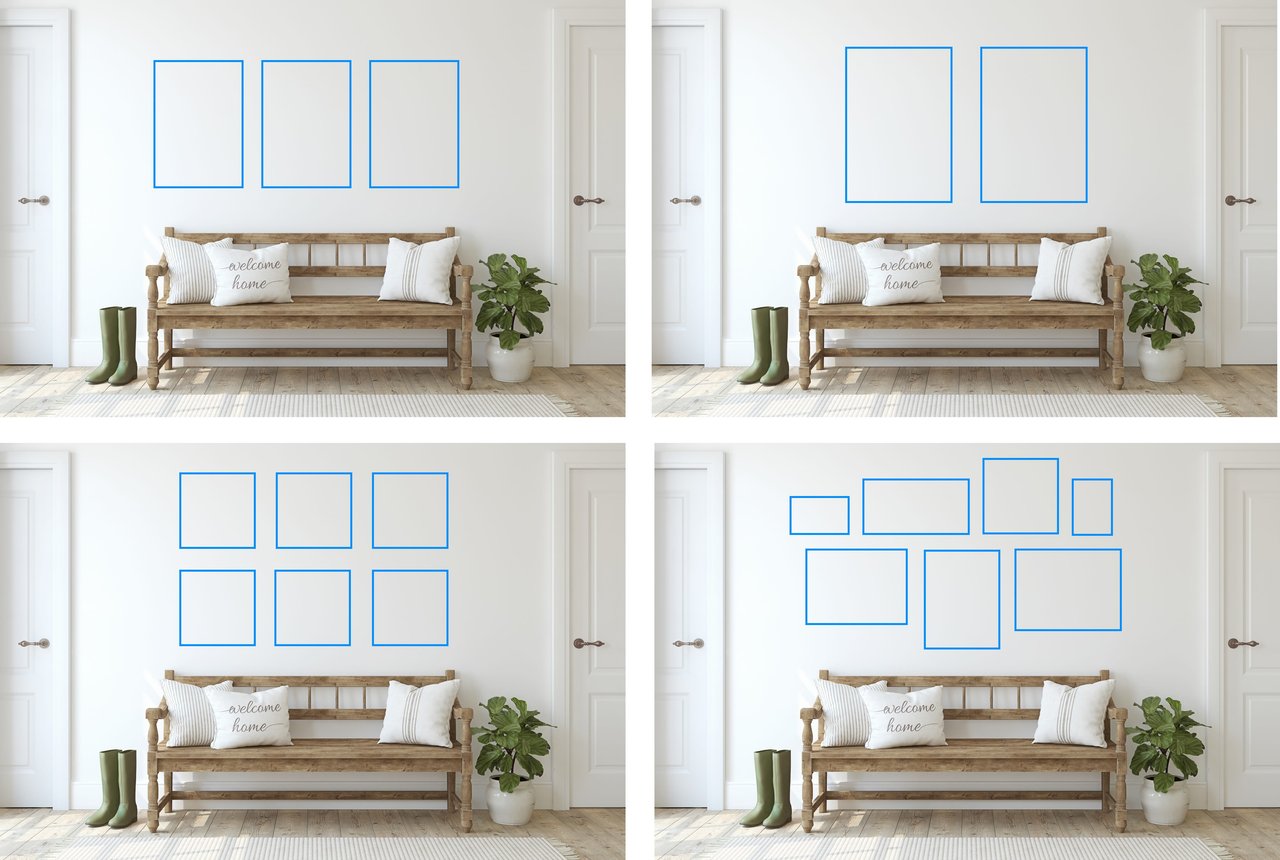
3) Plan the arrangement before hanging
Taking the time to map out your layout beforehand can save a lot of frustration later. You could do this by laying frames out on the floor, using paper templates, designing the wall using software like Figma, Sketch, Canva or even Keynote, or following a pre-designed structure.
We ship our gallery wall sets with a hanging guide that helps with placement and spacing, making it easier to reach the finished result and avoid unnecessary adjustments. And once you have all of your frames unboxed and ready for the wall, consult our Guide to Picture Frame Hanging for tip and how-to's.
4) Keep spacing consistent
Spacing plays a subtle but important role in how the wall feels overall, as uneven gaps can make even well-chosen frames look disconnected.
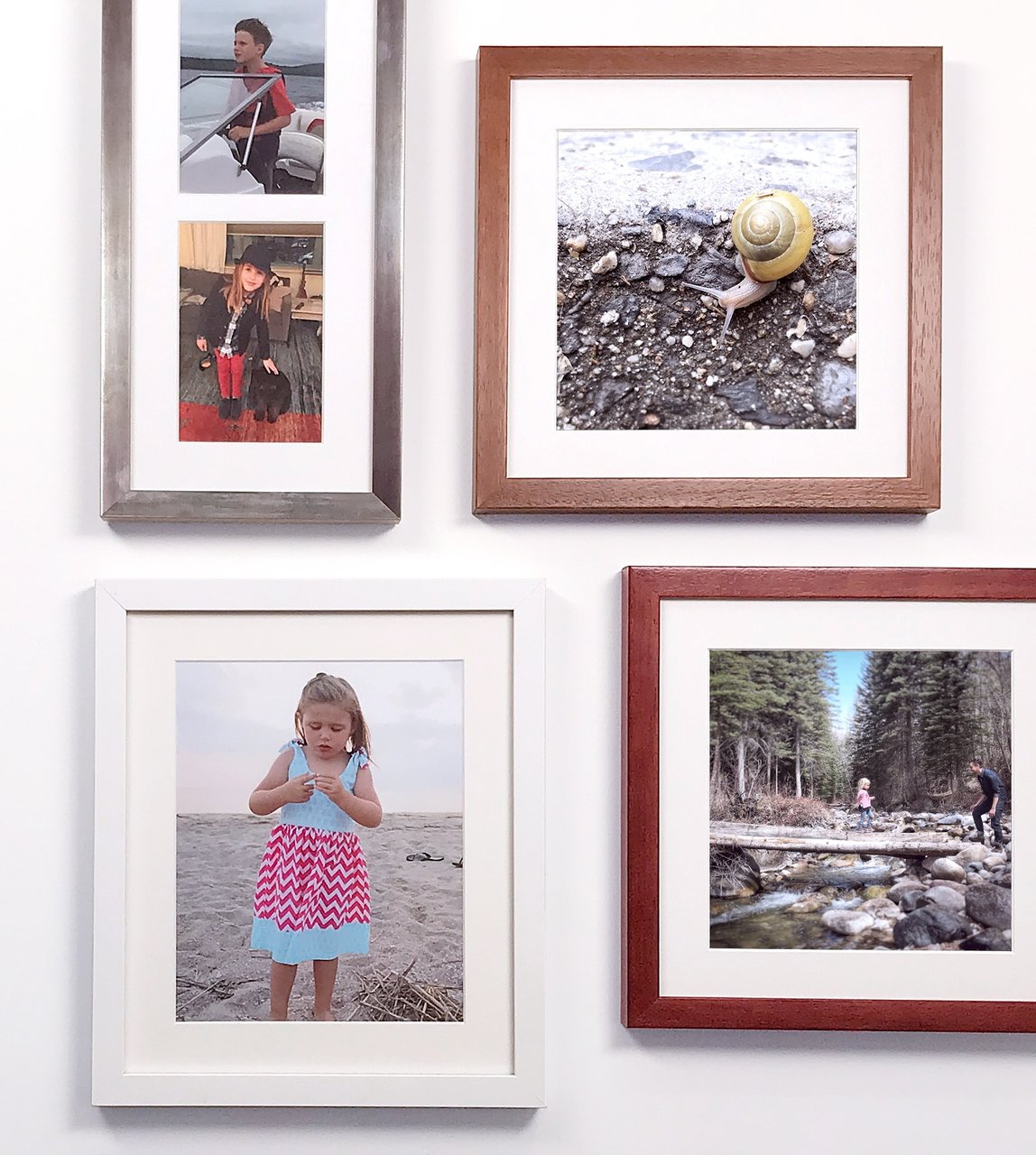
Keeping a consistent distance between frames helps create a sense of cohesion, even in more relaxed layouts.
5) Build something that reflects you
A gallery wall tends to feel more successful when it reflects your own tastes and experiences rather than trying to match a specific trend.
That might mean including meaningful items alongside artwork or allowing the wall to evolve over time. As Danielle explains: "Memento walls… are less about perfectly selected photos and more about decorating with meaningful memories."
Choosing frames that bring everything together
The frames you choose have a significant influence on the overall look, even if they don't immediately stand out.
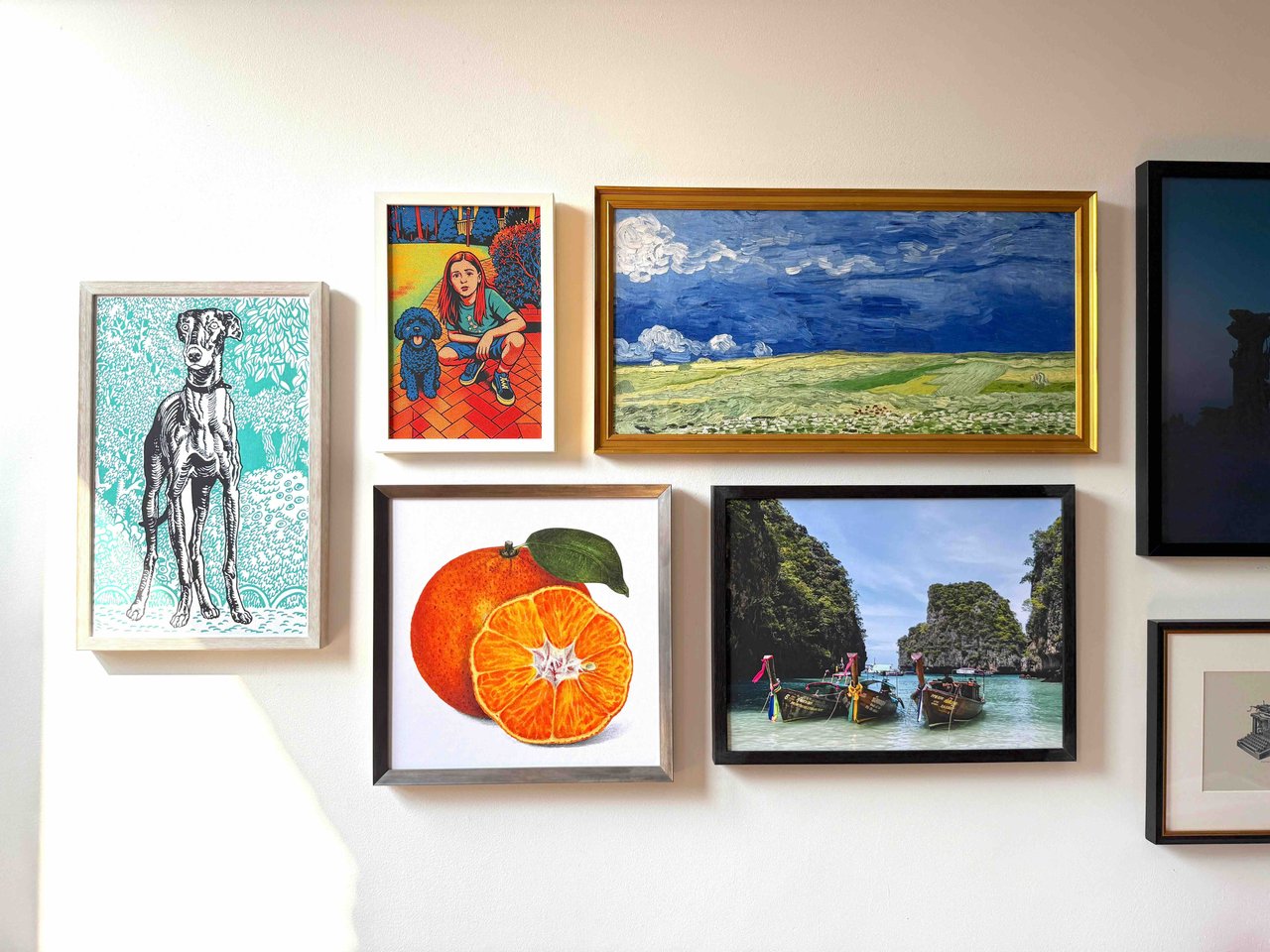
Black frames tend to create contrast and definition, white frames keep things feeling light and minimal, and wood finishes introduce warmth and a softer, more natural feel.
Our expert notes how frame choice can support cohesion across different styles: "Consistent framing can help unify a gallery wall, even when the artwork itself varies in style or subject."
Where gallery walls work best
Different layouts naturally suit different parts of the home, so it helps to match your approach to the space.
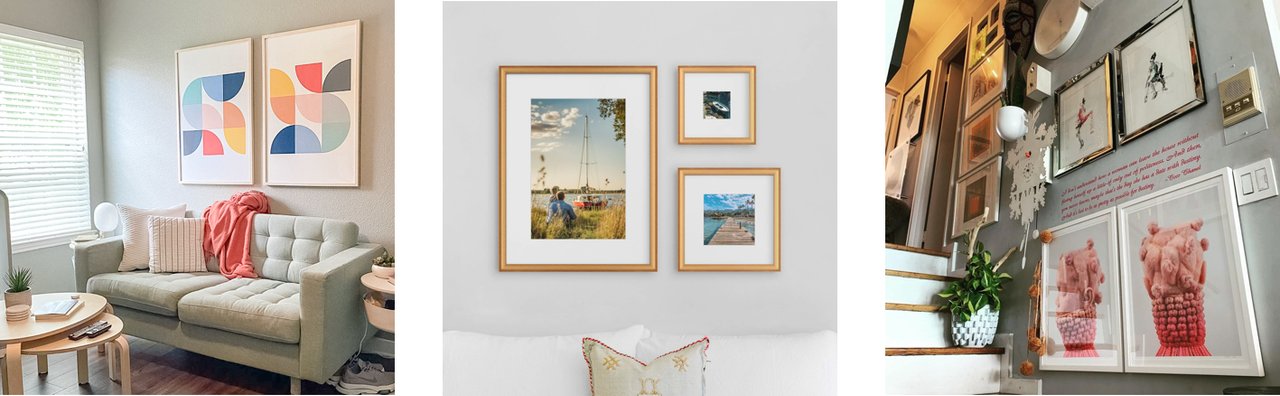
Wider layouts often sit comfortably above sofas, while bedrooms tend to benefit from more balanced arrangements. Hallways and staircases offer more flexibility, especially for organic layouts, and entryways are a great place to include more personal or story-led displays.
What will you create with your favorite photos and artwork?
A well-designed gallery wall doesn't need to follow strict rules, but it should feel balanced within the space and reflect the pieces you've chosen to display.
Starting with the layout and building from there makes the process far more manageable, and once the structure is right, the rest tends to fall into place naturally.
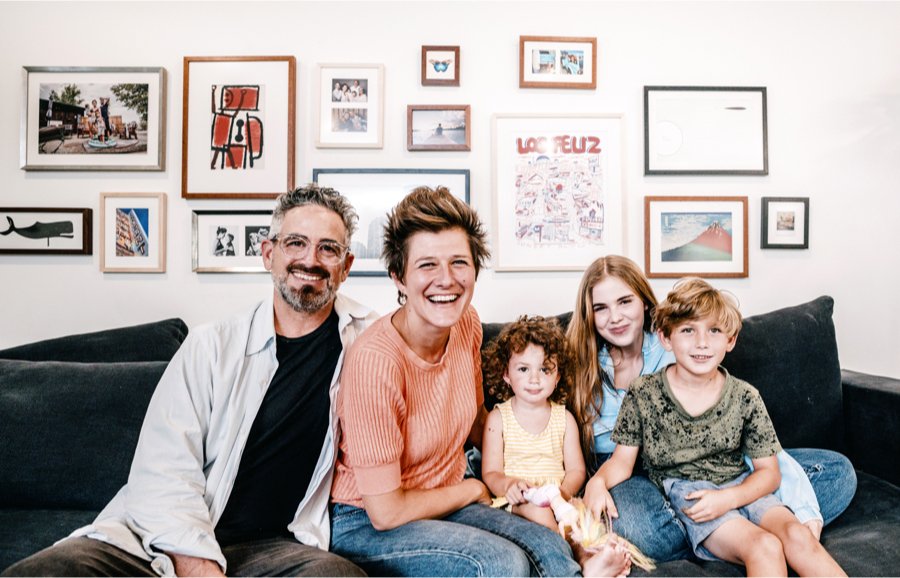
Ready to get started?
Pick a pattern that's right for the shape, size, and location of your wall, upload photos, and customize the frames to your specific tastes with our gallery wall designer!


Join for
Your First Order
